Beyond the ticker bar: When financial news becomes an experience
 Norkon Team
 Introducing the Financial Audience Model: a framework for understanding how financial publishers build lasting relationships with modern retail investors.
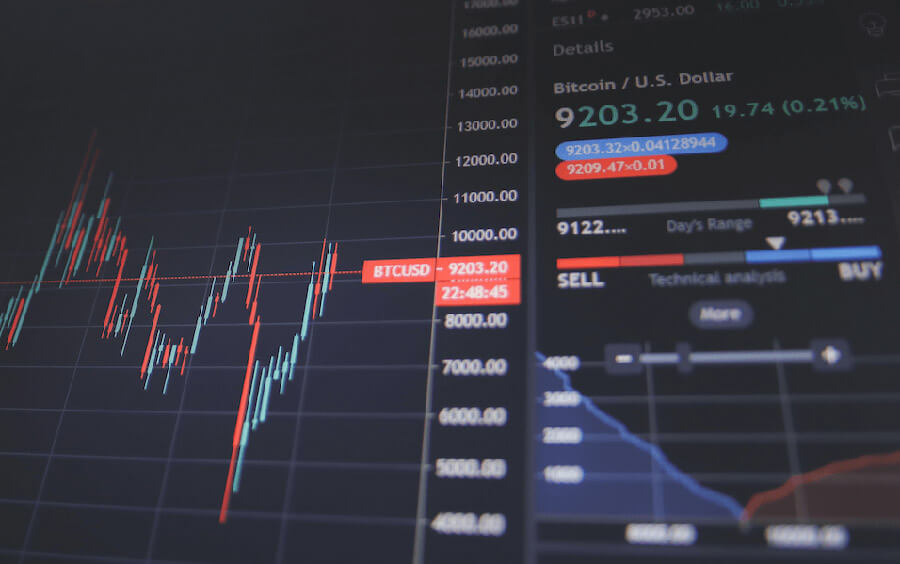
Live market data is one cornerstone for many financial publishers.
It enables elements such as ticker bars, market tables, watchlists, and dedicated market sections that provide retail investors with a quick overview of what is happening.
These live market experiences also allow publishers to connect editorial coverage with live market movements, giving audiences quick access to the numbers behind the news.
As retail investors become more digitally active and self-directed, there is a growing opportunity to build on these foundations. According to the World Economic Forum’s Global Retail Investor Outlook, retail participation in capital markets is expected to continue growing significantly over the coming years – up to 61% by 2030.
Strategically, this represents a broader shift for financial publishers. For years, market data has primarily been used to support reporting and provide access to information. Increasingly, however, it can play a much larger role in audience engagement.
As retail investing becomes more mainstream and financial information more abundant, the challenge is no longer simply helping readers find information – but helping them navigate it. Publishers that succeed will increasingly be those that move beyond information delivery and create experiences that help readers understand, follow, and engage with the markets over time.
It starts with a simple moment
Imagine a reader noticing that NVIDIA is suddenly one of the day’s biggest market movers.
Perhaps they discover it through their trading platform, or social media, or in a newsletter, or simply on a publisher’s own market overview.
What happens next?
A large market movement naturally raises questions.
Why did the stock move? Is this part of a wider trend? Which other companies are affected? What does it mean for the sector? Is there related coverage explaining this change?
This is where financial publishing comes into play.
A useful reference point is Smartocto’s User Needs Model, which helps publishers understand what audiences are trying to achieve when they consume content. The framework groups audience motivations around four broad needs: knowledge, understanding, inspiration, and action.
While these needs apply broadly across publishing, financial audiences tend to express them in slightly different ways.
When we apply the same thinking to financial publishing, the following pattern emerges:


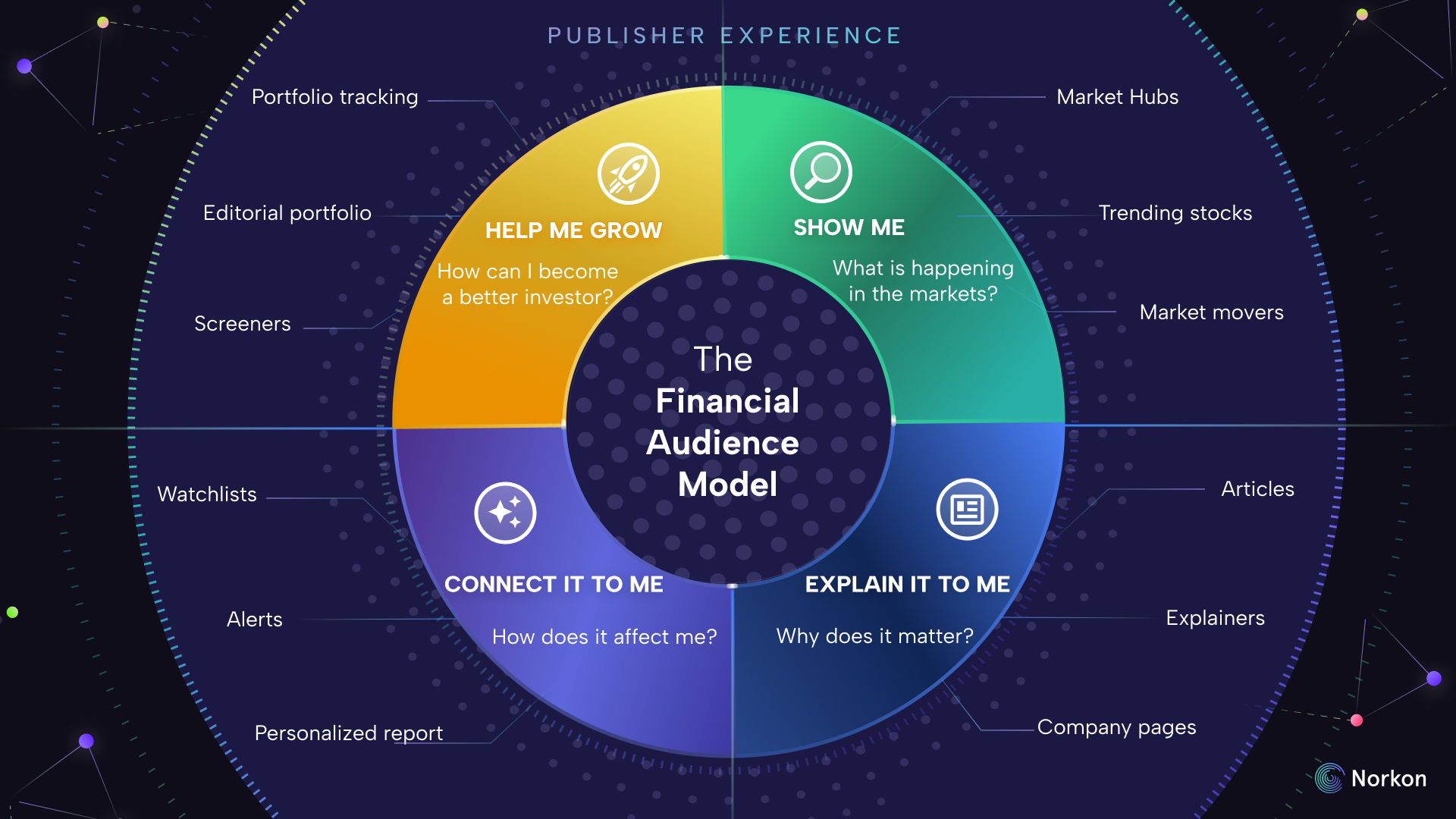
The Financial Audience Model builds on these four recurring needs and translates them into a financial publishing context:
- Show me: What is happening in the markets?
- Explain it to me: Why does this matter?
- Connect it to me: How does this affect me?
- Help me grow: How can I become a better investor?
From audience needs to audience experiences
Not every publisher will support these needs in the same way. However, viewed through that lens, market data takes on a different role.
Readers rarely come for the feature itself. They come because they are trying to understand, follow, or improve something.
Rather than simply powering ticker bars and stock pages, it becomes the foundation for a holistic experience that supports a range of needs.
Features like Market Movers and market hubs help readers discover what is happening. Editorial coverage and explainers provide context. Watchlists and alerts create personal relevance. Editorial portfolios, screeners, and portfolio tools help readers build confidence over time.
The important point is that these experiences are not isolated moments.
The more seamlessly they work together, the more valuable they become for both retail investors and publishers. The end result is a more connected experience that gives readers more reasons to return over time.
Market data as an engagement layer
The future of financial publishing is not about offering more data or more information. Instead, the larger opportunity lies in helping audiences navigate complexity.
Readers increasingly have access to the same market information through brokers, social platforms, newsletters, AI tools, and countless other sources.
What remains scarce is context, relevance, and guidance.
That is why the most successful financial publishers may not be those with the largest datasets, but those that build the strongest relationships with their audiences. Information is abundant, but relationships are becoming differentiators.
Want to explore how financial publishers are using market data, personalization, and audience engagement experiences to deliver greater value to readers? Get in touch with our team for a conversation and a personalized demo.