Editorial Portfolios Are Taking Off for Financial Publishers
 Norkon Team
 Today’s financially interested audiences – and especially retail investors – seek to understand what happens in the market, why it happened, and how other investors responded. They’re looking for insights that will help them connect the dots between markets and real-world decisions.
That’s where the editorial portfolio comes in.
In this blog post, we explore why this approach is gaining traction as a strategy among financial publishers across Europe and how this module in our Pulse solution helps them create real value and relevance for their readers.
What is an editorial portfolio?
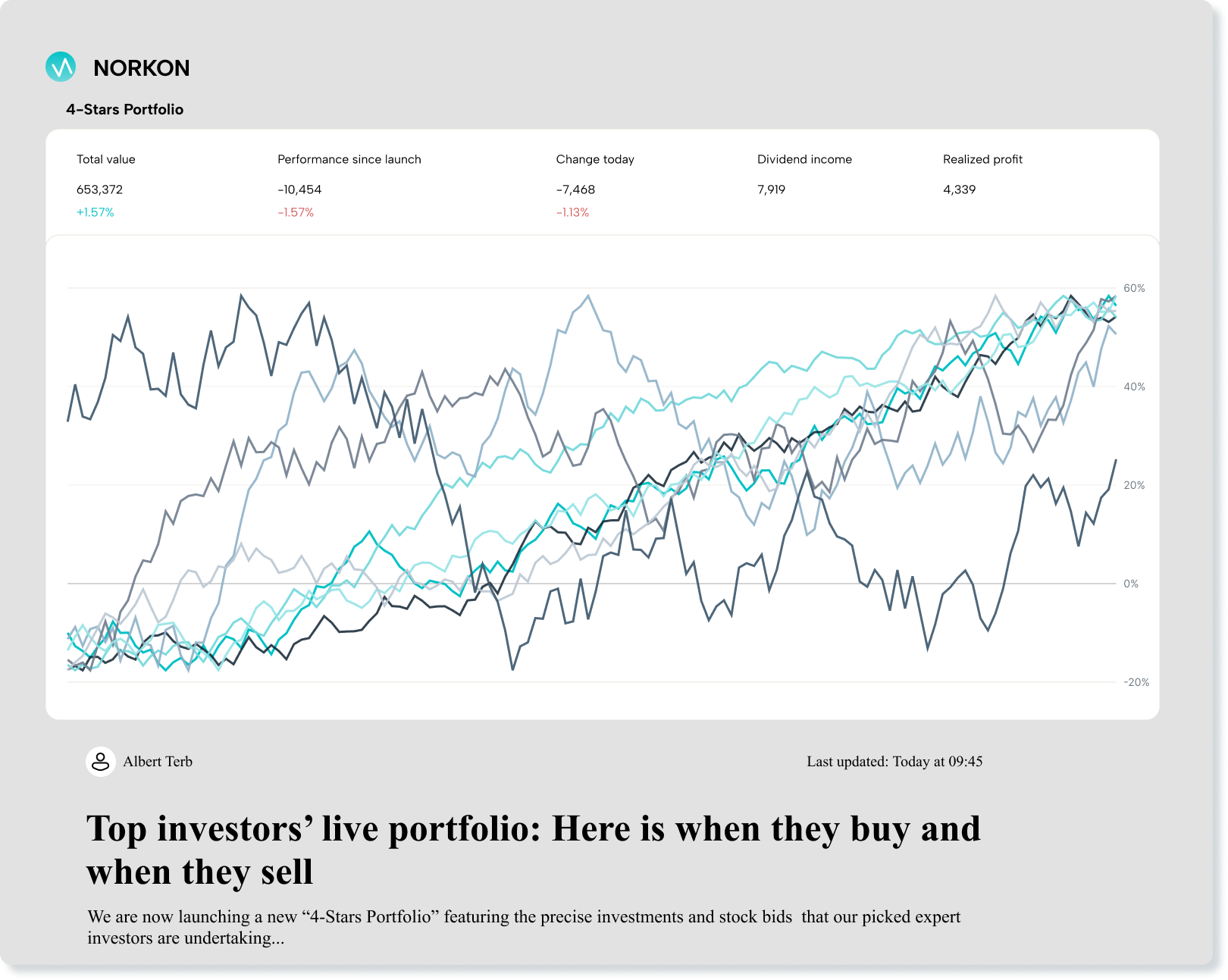
An editorial portfolio is a real, transparently managed investment portfolio run by a newsroom or an editorial team, and embedded directly into editorial coverage.
Instead of only writing about what happened in the market, this approach allows publishers to show when real trading decisions are made, and why. It gives audiences a clear view into real investment strategies that are constantly evolving, paired with editorial explanations.
For retail investors, that level of transparency makes a true difference. It turns abstract market commentary into something tangible and easy to understand, especially when combined with articles that break down the thinking behind every move.
How does it bring value to readers?
For readers, editorial portfolios make markets easier to understand.
They combine context with real-world application. Instead of abstract advice, readers can follow concrete strategies, see how decisions play out, and build confidence in their own understanding over time.
Why it is becoming a strategic activity for financial publishers
Editorial portfolios take an approach that strengthen trust, engagement, and differentiation.
This gives publishers a distinct and authoritative voice in a crowded market and create natural reasons for readers to return, as performance and decisions vary over time. At the same time, they position editorial teams as credible financial experts.
What makes the editorial portfolio so unique?
At its core, it’s the combination of transparency and continuity.
Publishers aren’t just reporting on markets, but showing a strategy in motion. Decisions, timing, and outcomes are visible and explained as they happen. That creates a narrative readers can follow, rather than isolated pieces of commentary.
Live in action: What publishers experience with an editorial portfolio
“Investor Toomas” at Äripäev
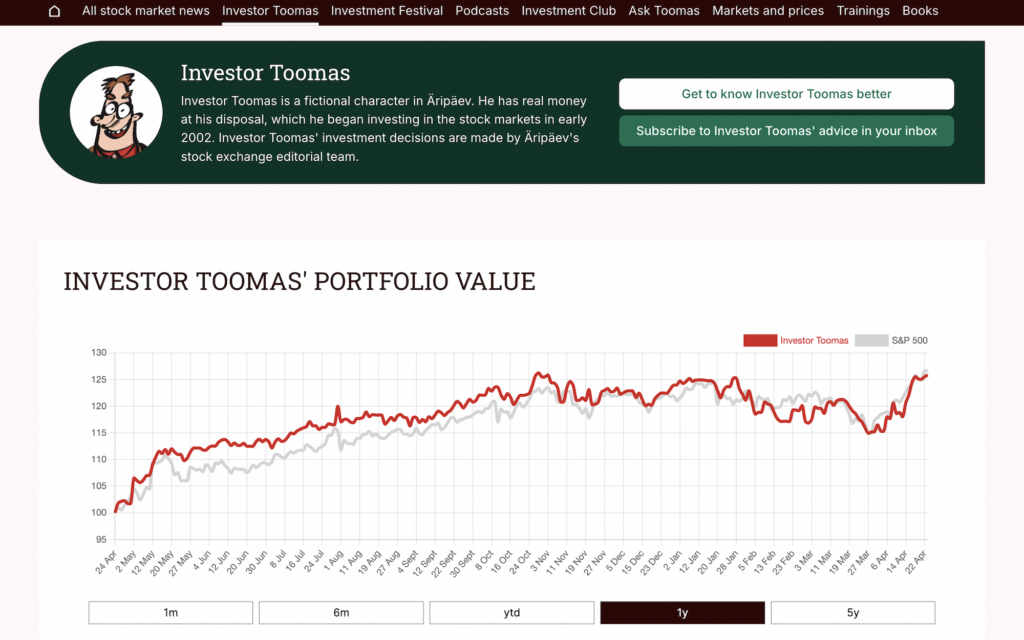
(Google translated into English)
Äripäev, an affiliate of Bonnier News, has been running Investor Toomas for years.
Built around a real editorial-managed portfolio since 2002 and having achieved proven, outstanding investment performance, it became much more than a data feature. It turned into a trusted source for readers, something they would follow, learn from, and even benchmark themselves against. This has led to strong reader engagement, repeat visits, and a dedicated community that didn’t just read the news, but interacted with it.
Äripäev’s Investor Toomas (Investor Thomas) is a real investment portfolio managed by Äripäev journalists since 2002. It has achieved more than 10x growth and outperformed the S&P 500. Investor Toomas exemplifies Äripäev’s long-standing financial expertise and editorial credibility.
– Äripäev case study
“All Star Portfolio” at Børsen
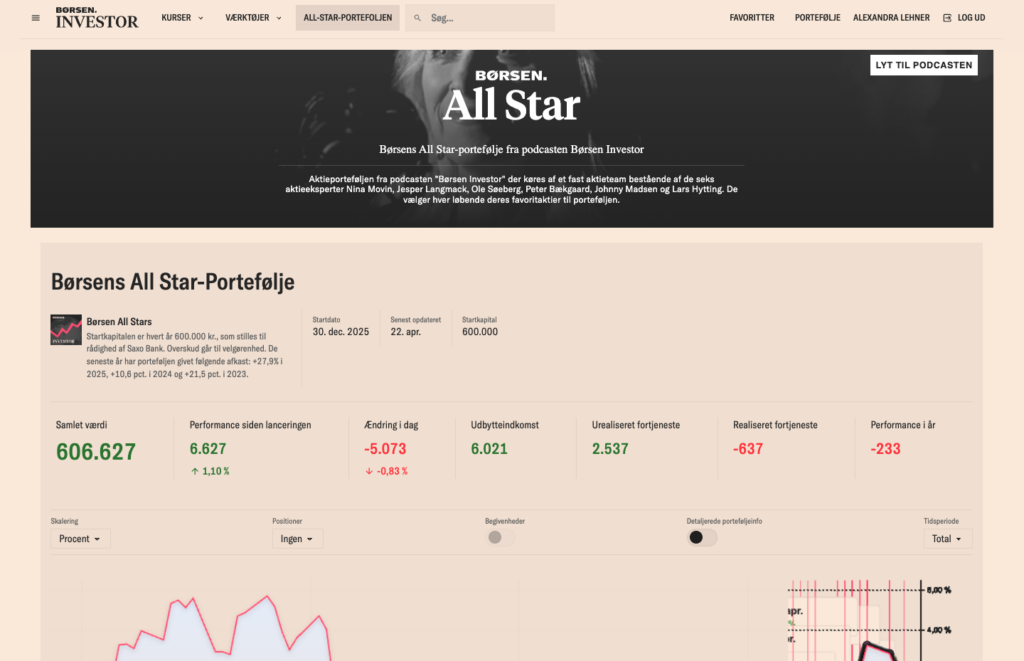
Another strong case in point is Børsen’s All Star Portfolio, developed alongside the Børsen Investor podcast.
The concept is simple but effective: a fixed team of six equity experts each contributes their current top stock picks, which together form a single, actively followed portfolio.
The portfolio is relaunched each year with a starting capital of 600,000 DKK (roughly $94,000 USD), provided by the Danish Saxo Bank. Over time, it has delivered solid returns, while also adding a meaningful twist: any profits are donated to charity.
What makes it particularly compelling from an editorial perspective is the combination of voices and continuity. Readers don’t just see individual opinions; they follow how a group of experienced investors selects, debates, and evolves a shared strategy over time. It’s a clear example of how editorial portfolios can turn expert insight into a transparent, ongoing narrative that audiences can engage with and learn from.
The “Market Portfolio” at Trends
Similar to the example above, the publisher Trends, part of Roularta Media Group, also couples an editorially-managed portfolio with its journalistic content – accessible only to registered readers.
Recently, the publisher launched a stock market investment game and created a dedicated beginner portfolio designed to be followed in real time. Instead of just explaining investment principles, the transparent, diversified portfolio allows players to track its evolution. The intention is to make it replicable: readers should be able to read about diversification or market timing, see it applied, and follow it step by step in a realistic setting.
It’s a clear example of how editorial portfolios turn financial journalism into something practical and engaging.
The “Musterdepot” at Handelsblatt
Another example comes from Germany, where Handelsblatt has been running its “Musterdepot” behind a paywall for years. As part of its subscription strategy, the model portfolios offer readers direct insights into selected stocks and commodities, timely trading insights and investment strategies from successful financial journalists or financial experts.
Why this matters now
In line with the latest findings from the World Economic Forum about retail investor behaviours and trends, it is clear that the new generation of investors isn’t passive anymore. They’re informed, curious, and looking for insight they can actually apply.
Publishers are in a unique position to deliver these insights and reliable guidance by applying strategies readers can follow and learn from over time.
Want to bring your editorial portfolio to life with Pulse?
As publishers rethink how to continuously create trusted value at a time when many readers are tempted to settle for AI-generated answers, it becomes essential to connect editorial content more directly with markets and with individual readers.
The editorial portfolio is a module of Pulse, allowing you to:
- Embed live portfolios alongside your articles
- Explain decisions with rich editorial context
- Help readers learn by example, not just by observation
Pulse turns passive readers into active participants by building returning reader habits, resulting into long-term loyalty.
Ready to elevate your financial coverage? Reach out to learn more about Pulse and start telling the stories your audience has been waiting for.